
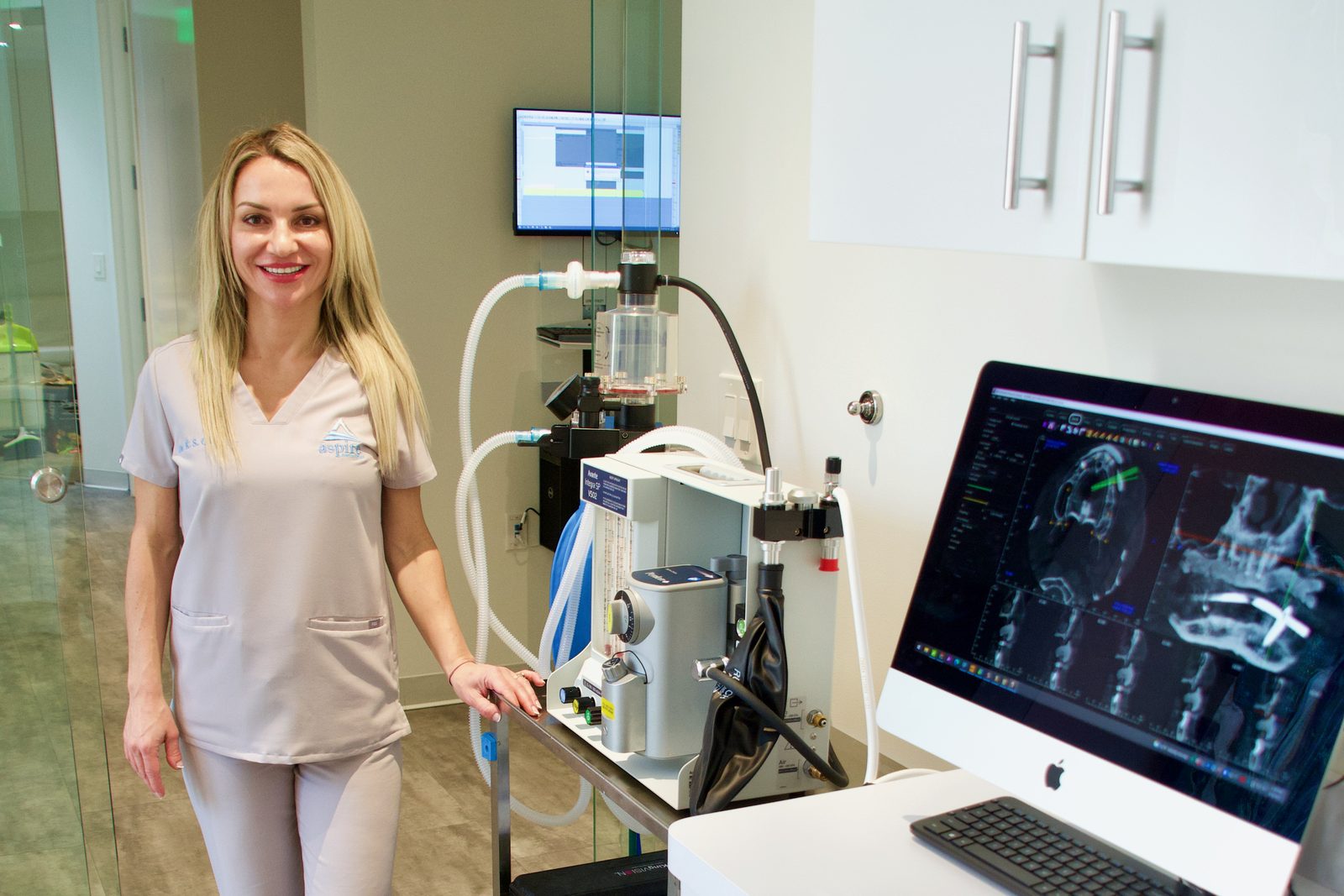
In short: for deep sedation and general anesthesia in the dental office, the model I advocate is two specialists for one patient. The dentist does the dentistry, and a separately trained, board-certified dentist anesthesiologist does nothing but the anesthesia. This applies to pediatric dental anesthesia and to adult patients alike, from a toddler with severe tooth decay to an adult with dental phobia or a full-arch implant case. A manifesto by Konstantina S. Giesberg, DDS, DADBA, founder of Aspire Anesthesia.
Why I am writing: answering the critics of dental sedation
The question is not only whether anesthesia happens in a hospital or a dental office. The more important questions are who provides it, how the patient is assessed, whether the office is properly equipped, and whether one person stays responsible for the anesthesia from start to finish.
Every few months another article warns that anesthesia in the dental office is dangerous. Some are written by physicians who believe it belongs in a hospital. Others come from dentists who see a separate anesthesia provider as a cost they can do without. I agree with part of what they say. I want to answer the rest from where I actually work: in the operatory, next to the patient.
I remember a woman in her thirties with a history of significant opioid use who needed full-arch implant reconstruction of both jaws (double All-on-4). Her medical history made it difficult to find a team willing to undertake both the surgery and the anesthesia. By carefully considering her opioid history, addressing her anxiety, and developing an individualized anesthesia plan, I was able to help make her treatment possible.
Another patient whose story has stayed with me is an elderly woman with advanced Alzheimer's disease whose deteriorating dental health had begun to affect her nutrition and overall well-being. She was losing weight and needed full-mouth extractions followed by implant rehabilitation. Her family was struggling alongside her, watching their mother, grandmother, and great-grandmother face increasing difficulties with even the simplest aspects of daily life. Being part of the team that helped her receive the care she needed, and offering some relief to a family carrying so much concern, was deeply rewarding.
I also think of a six-year-old boy who had undergone three unsuccessful attempts at dental treatment with nitrous oxide. He was nonverbal, and his mother, understandably frustrated, insisted on involving a dedicated anesthesia specialist. I will never forget the relief on her face when his treatment was finally completed. Even more memorable was the happiness in her son's eyes when he learned that the dental work was over. That experience marked the beginning of a special bond with both of them. Becoming the dentist anesthesiologist his family continues to trust for his dental care has been one of the most meaningful rewards of my career.
Three very different patients, three very different challenges. What they shared was the need for an individualized anesthesia plan, careful clinical judgment, and a dedicated professional whose responsibility was the anesthesia. Whether the patient is three or eighty-three years old, the principle remains the same: one clinician focuses on the dentistry, while another focuses entirely on the anesthesia.
Seven principles for safe dental anesthesia
- One patient, two specialists. For deep sedation and general anesthesia, the clinician performing the dentistry should not also be responsible for the patient's airway, breathing and circulation. Each demands full, uninterrupted attention. Moderate IV sedation by a properly trained dentist has its place, but as sedation deepens or a patient's medical history grows more complex, the anesthesia needs its own specialist. A second, separately trained anesthesia specialist stays at the patient's side and does nothing but the anesthesia: titrating medications, protecting the airway, interpreting the monitors and anticipating problems before they appear. That responsibility runs from the pre-anesthesia assessment through induction, maintenance and emergence, until the patient meets discharge criteria and goes home with a responsible adult. I never leave my patients.
- Anesthesia is a specialty. Dental anesthesiology has been an ADA-recognized specialty since 2019. Its three-year, hospital-based residency places dentists in medical operating rooms for general surgical cases, with rigorous rotations in pediatrics, emergency medicine, intensive care, cardiology and pulmonology. A sedation course is a reasonable starting point, but it is a fundamentally different level of training, and patients deserve to know the difference. A sedation permit may rest on about twenty supervised cases with oral and limited intravenous medications. My residency alone included about two thousand cases of deep sedation and general anesthesia, using inhaled agents and oral or nasal intubation.
- Children need pediatric anesthesia care. Children have smaller airways, use oxygen faster and have less reserve. They need pediatric training, pediatric-sized equipment and pediatric dosing every time. Keeping up with the latest anesthesia guidelines and Pediatric Advanced Life Support (PALS) requirements is essential for me. The AAP and AAPD pediatric sedation guideline, reaffirmed in June 2025, already requires that deep sedation include an independent observer, trained at a minimum in PALS, whose only responsibility is to continuously monitor the child. I apply the same rule and practices to my adult patients.
- Adults with complicated histories deserve a specialist. Heart and lung disease, sleep apnea, diabetes, dementia, long medication lists, a history of opioid use, years of avoiding the dentist out of fear, and of course adults with special needs: all of these patients call for careful planning. Each of them deserves an individual assessment and a safe path to treatment, whether in the dental office or, when indicated, in a hospital. Their medical conditions, medications, allergies, previous surgeries, habits, and past experiences and expectations must be well documented and taken into consideration. Medical colleagues are contacted as necessary for optimization, and the surgery and anesthesia are custom-tailored for maximum predictability and success.
- Every plan is written for one patient. I build each anesthesia plan around the patient's physical status and adjust it during surgery as the patient responds. The monitoring standard does not change with the address: pulse oximetry, ECG, blood pressure, capnography, temperature when indicated, airway and emergency equipment, and a written record.
- Preparation is part of the anesthesia. Before surgery, the patient's medical history, medications and allergies are verified with their primary care physician and specialists. I personally contact each of my patients two to three days before surgery to discuss my findings, help them know what to expect on the day of the procedure, and soothe their anxieties by answering their questions and concerns. This personal touch helps both of us: the patient with their worries and overall wellbeing, and me with a customized anesthesia plan. The office has an oxygen supply and an automated external defibrillator (AED) on the premises. We always give the surgical team a short introduction to sedation and anesthesia and train them in the most common emergency scenarios, with immediate recognition and fast response. If a procedure would run long enough to affect the patient's wellbeing and recovery, we coordinate with the surgical team to split it into two visits. The ADA's updated sedation and anesthesia guidelines, released in April 2026, place the same emphasis on emergency preparedness, documented protocols and regular training drills. These are daily routines for us at Aspire Anesthesia, because this is where predictable results start.
- Access is a safety issue. Children and adults who cannot be treated awake often wait months for hospital operating-room time while infection and pain get worse. Office-based anesthesia by a specialist shortens that wait, costs much less and keeps patients with the dental team they already trust. Office-based anesthesia is not right for every patient. Severe or poorly controlled heart or lung disease, an anticipated difficult airway, significant sleep apnea or recent medical instability may call for a hospital setting. Recognizing those cases is part of my job, and when a case belongs in a hospital, I say so early.
To my physician colleagues: Why office-based dental anesthesia works
We share a fundamental commitment: patient safety must always come first. For deep sedation and general anesthesia, the clinician performing the procedure should not also be responsible for the anesthesia. Dentist anesthesiologists have advocated for this separation of responsibilities for years, and in July 2026 the American Society of Anesthesiologists made the same point about the ADA's proposed pediatric guidelines. On this, we fully agree. Where our perspectives may differ is in the assumption that general anesthesia can be safely provided only in a hospital.
Dentist anesthesiologists receive extensive hospital-based training, working alongside physician anesthesiologists in operating rooms and completing rotations across medical specialties. I completed my residency at Wyckoff Heights Medical Center in Brooklyn, where I provided about 2,000 anesthetics. That training shaped the clinical judgment and vigilance I bring to every patient.
Today, we bring that expertise into dental offices, providing anesthesia for children and adults in the setting where their dental treatment takes place. Research published in Anesthesia Progress has demonstrated shorter treatment times for office-based dental anesthesia compared with hospital-based care, while earlier research cited in the study suggests potential cost savings.
The question should not be whether a hospital or a dental office is inherently safer. It should be whether the patient, the anesthesia provider, the clinical team and the facility are appropriately matched to the procedure. Some patients unquestionably require hospital-based care. Others can receive anesthesia safely and efficiently in a properly equipped dental office.
If we want to advance dental anesthesia safety, we should work together to make dedicated anesthesia expertise an expectation for deep sedation and general anesthesia. Sending every anxious child or every full-arch implant patient into an already burdened hospital system is not the answer. Appropriate patient selection, specialized training and clearly defined clinical responsibilities are.
To my dental colleagues: What a dentist anesthesiologist adds to your practice
I never left dentistry. I still love it, particularly prosthodontics, where esthetics, function and precision come together. Occasionally, I have the opportunity to practice alongside my brother, a general dentist in Upstate New York. Those days remind me why I chose dentistry in the first place.
Anesthesia, however, found me. During my training, the director of the anesthesiology program saw something in me and encouraged me to pursue the specialty. What began as an unexpected opportunity became my calling.
Many of the dentists I work with are experienced in providing sedation for their own patients. They turn to me when a case requires a deeper level of anesthesia, greater medical complexity or expertise beyond their usual scope of practice. I value that trust. My advice is simple: when in doubt, reach out. A conversation before a procedure can help identify risks, clarify options and prevent complications.
Over the years, these professional relationships have grown into real friendships. I care about the success of the dentists I work with, and I want to help them expand what they can safely offer their patients. Whether through direct anesthesia care, preoperative planning or a conversation about a challenging case, I make myself available whenever my expertise can help.
Collaboration does not always mean agreement. At times, I may recommend additional medical evaluation, improvements to emergency preparedness or dividing a lengthy procedure into separate appointments. These recommendations are never made lightly. They reflect my responsibility to the patient and my commitment to the whole team's success.
My role is not simply to provide anesthesia. It is to be a clinical partner whose judgment, preparation and presence allow the dentist to focus entirely on the dentistry.
What a good day looks like: Predictable, safe dental anesthesia
My most rewarding days are the ones when the surgeon tells me the procedure went smoothly because the anesthesia went smoothly.
Whether my patient is having a thirty-minute wisdom tooth extraction or an eight-hour full-arch implant reconstruction, my approach is the same: understand the patient, anticipate the challenges, individualize the anesthetic and stay with my patient the whole time. Even the best-planned anesthetic can surprise me. When it does, I stay calm and solve it. I have always loved a hard problem.
But technical success alone is not what makes a good day. It is also the anxious patient who wakes up relieved, the parent whose worry turns into reassurance, and the surgeon who can concentrate completely on excellent dental care.
At the end of the day, that is what I work for: thoughtful preparation, predictable care, real collaboration and a patient who feels safe, respected and cared for.
Konstantina S. Giesberg, DDS, DADBA
Board-Certified Dentist Anesthesiologist · Founder and Medical Director, Aspire Anesthesia
Frequently asked questions about dental anesthesia
What is a dentist anesthesiologist?
A dentist anesthesiologist is a dentist who has completed at least three years of hospital-based anesthesiology residency after dental school. Dental anesthesiology has been an ADA-recognized dental specialty since 2019, with board certification through the American Dental Board of Anesthesiology (DADBA). Dentist anesthesiologists provide IV sedation, deep sedation and general anesthesia for dental treatment, often in the dental office.
Is general anesthesia in a dental office safe for children?
Every anesthetic carries some risk, for children and adults. Risk is lowest when a separately trained anesthesia specialist is responsible only for the anesthesia, with pediatric-sized equipment, continuous monitoring, careful case selection and a recovery plan. Parents should ask who will give the anesthesia, how that person was trained, and whether anyone else will be doing the dentistry at the same time.
Can adults have sedation or general anesthesia for dental work?
Yes. Adults choose sedation dentistry or general anesthesia for severe dental anxiety or phobia, a strong gag reflex, special needs, medical complexity, or long procedures such as full-arch implant surgery (All-on-4 or All-on-6). A dentist anesthesiologist reviews the patient's health first and recommends the right level of anesthesia.
What is the single-operator model of dental sedation?
In the single-operator model, one clinician performs the dental procedure and is also responsible for the sedation or anesthesia. Physician anesthesiologists and dentist anesthesiologists have both warned about this model for deep sedation and general anesthesia, especially in children. The alternative is a separate anesthesia provider whose only job is the patient's anesthesia and safety.
Why not have dental treatment under anesthesia in a hospital?
Hospital operating-room time for dental cases can mean long waits and higher costs, while infection and pain progress. Office-based anesthesia by a specialist can shorten the wait and lower the cost, with the patient's own dental team. Some patients still belong in a hospital, and part of the anesthesia specialist's job is to say so.
How do I find a dentist anesthesiologist near me?
Ask your dentist whether they work with a board-certified dentist anesthesiologist, or search the directory of the American Society of Dentist Anesthesiologists. Aspire Anesthesia provides mobile IV sedation and general anesthesia for dental practices in New York, New Jersey, Pennsylvania and Florida.
About the author
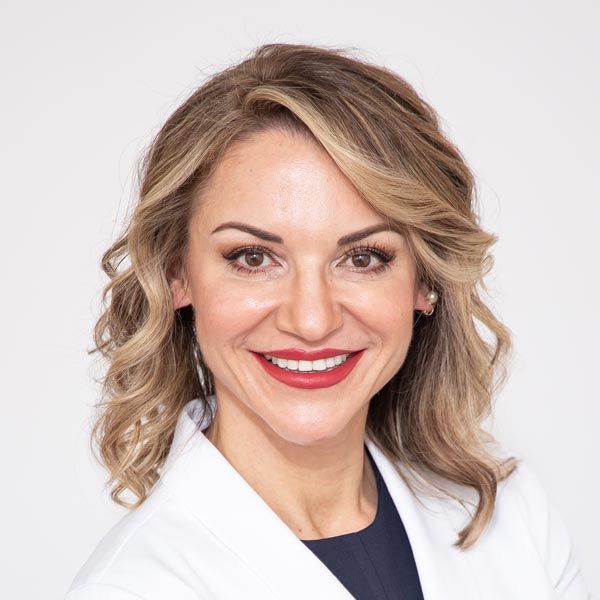
Dr. Konstantina S. Giesberg, DDS, DADBA, is a board-certified dentist anesthesiologist and the founder and medical director of Aspire Anesthesia. She earned her DDS at the University at Buffalo and completed her dental anesthesiology residency at Wyckoff Heights Medical Center in Brooklyn, with rotations in medical operating rooms, emergency medicine, intensive care, cardiology and pediatrics. She has provided more than 6,000 anesthetics for children and adults and has practiced dentistry since 2014.
Sources
- Anesthesiology becomes latest recognized dental specialty (ADA, 2019)
- Dental Anesthesiology: training programs (ADEA)
- Study finds office-based dental anesthesia is on the rise, summarizing Anesthesia Progress 64(4), 2017
- The risks of the single-provider dental sedation model (KevinMD, December 2025)
- The single-provider-operator-anesthetist model: a major safety issue for children (APSF)
- ADA Guidelines for the Use of Sedation and General Anesthesia by Dentists (American Dental Association, adopted October 2025, released April 2026)
- Guidelines for Monitoring and Management of Pediatric Patients Before, During, and After Sedation for Diagnostic and Therapeutic Procedures (American Academy of Pediatrics and American Academy of Pediatric Dentistry, reaffirmed June 2025)
- ASA Opposes Operator-Administered Anesthesia in Proposed ADA Pediatric Anesthesia Guidelines (American Society of Anesthesiologists, July 2026)
Planning a sedation or general anesthesia case? When in doubt, reach out. A short conversation before the case is where safe anesthesia starts.
Discuss your practice →